

Southeast Alabama — Wiregrass Region

Professional
Concrete Work Services

From driveways to equipment pads, Hyde's Construction pours quality concrete that stands up to Southeast Alabama's clay soils and weather extremes. DJ Hyde personally oversees every pour across Coffee, Dale, Houston, Pike, and Barbour Counties throughout the Wiregrass region.

Why Hyde's Construction
Fully Insured
Full coverage on every job site
Owner Operated
DJ Hyde runs every project
Based in Ariton, AL
Serving the Wiregrass region
Free On-Site Estimates
No obligation, same-day response
Call DJ Hyde directly(334) 432-1473

Mon–Fri 7am–5pm · Fast response guaranteed

Service Overview

What Is Professional Concrete Work?

Concrete work involves site preparation, forming, pouring, and finishing concrete slabs, driveways, pads, and structures using proper mix designs and reinforcement for the specific application. We handle everything from excavation and base preparation through final finishing, using laser levels for precise grades and steel reinforcement where structural loads require it.

Quality concrete work delivers a permanent, weather-resistant surface that handles heavy equipment loads, vehicle traffic, and Southeast Alabama's freeze-thaw cycles without cracking or settling. Proper base preparation and drainage prevent the heaving and cracking that destroys concrete poured over unstable clay soils.

The Wiregrass region's expansive clay soils and seasonal moisture changes demand careful attention to base preparation and drainage design. Without proper subgrade stabilization, concrete slabs crack as clay soils expand and contract, leading to costly repairs and safety hazards on driveways and equipment pads.

DJ Hyde brings decades of concrete experience to projects from Enterprise to Eufaula, personally overseeing every pour to ensure proper technique and materials. As an owner-operated business, we stake our reputation on every cubic yard we place.

Get a Free Concrete Estimate
Hyde's Construction Concrete services in Southeast Alabama
Common Project Types

When Professional Concrete Makes the Difference

These applications require precise forming, proper reinforcement, and expert finishing to deliver long-term performance.

01
Residential Driveways
Concrete driveways require 4-6 inches of thickness with wire mesh or rebar reinforcement, proper base compaction, and control joints every 10 feet to prevent random cracking. We excavate to proper depth, install crushed stone base, and use fiber-reinforced concrete mix designed for vehicle loads and weather exposure.
02
Equipment and Storage Pads
Heavy equipment pads need 6-8 inch thick concrete with #4 rebar grid reinforcement to handle concentrated loads from tractors, combines, and construction equipment. We design the pad size and thickness based on your specific equipment weights and provide proper drainage around the perimeter to prevent undermining.
03
Barn and Shop Floors
Agricultural building floors require level concrete with proper slope for drainage, sealed joints to prevent moisture penetration, and surface treatments for traction and easy cleaning. We coordinate with building contractors to ensure proper elevation and utility rough-ins before pouring.
04
Sidewalks and Walkways
Pedestrian concrete needs 4-inch thickness with proper slope for drainage and non-slip surface finish for safety. We form curves and transitions smoothly, install expansion joints at building connections, and apply broom finish or stamped texture as specified.
05
Retaining Walls
Concrete retaining walls require engineered footing design, proper reinforcement placement, and drainage behind the wall to prevent hydrostatic pressure buildup. We excavate below frost line, install drainage pipe and gravel backfill, and use forms designed for the wall height and soil conditions.
06
Foundation Repairs
Concrete foundation work involves removing damaged sections, installing proper reinforcement, and pouring new concrete that bonds with existing structures. We assess the cause of failure, address drainage issues, and use compatible concrete mixes to ensure long-term structural integrity.
The Process

Our Concrete Construction Process

Every concrete project follows proven steps to ensure proper curing, structural integrity, and long-term performance.

1

Site Assessment and Design

DJ visits your property to evaluate soil conditions, drainage patterns, and load requirements for your specific application. We test soil bearing capacity, check for underground utilities, and design the concrete thickness, reinforcement, and base requirements based on actual site conditions and intended use.

2

Excavation and Base Preparation

We excavate to proper depth using our tracked excavators, remove unsuitable clay or organic material, and install compacted crushed stone base where needed. The subgrade gets compacted to 95% standard proctor density, and we install vapor barriers or drainage systems as the application requires.

3

Forming and Reinforcement

Steel or wooden forms get set to precise elevations using laser levels, with proper bracing to handle concrete pressure during the pour. We place rebar or wire mesh reinforcement according to structural requirements, maintaining proper cover distances and tying intersections securely.

4

Pouring and Finishing

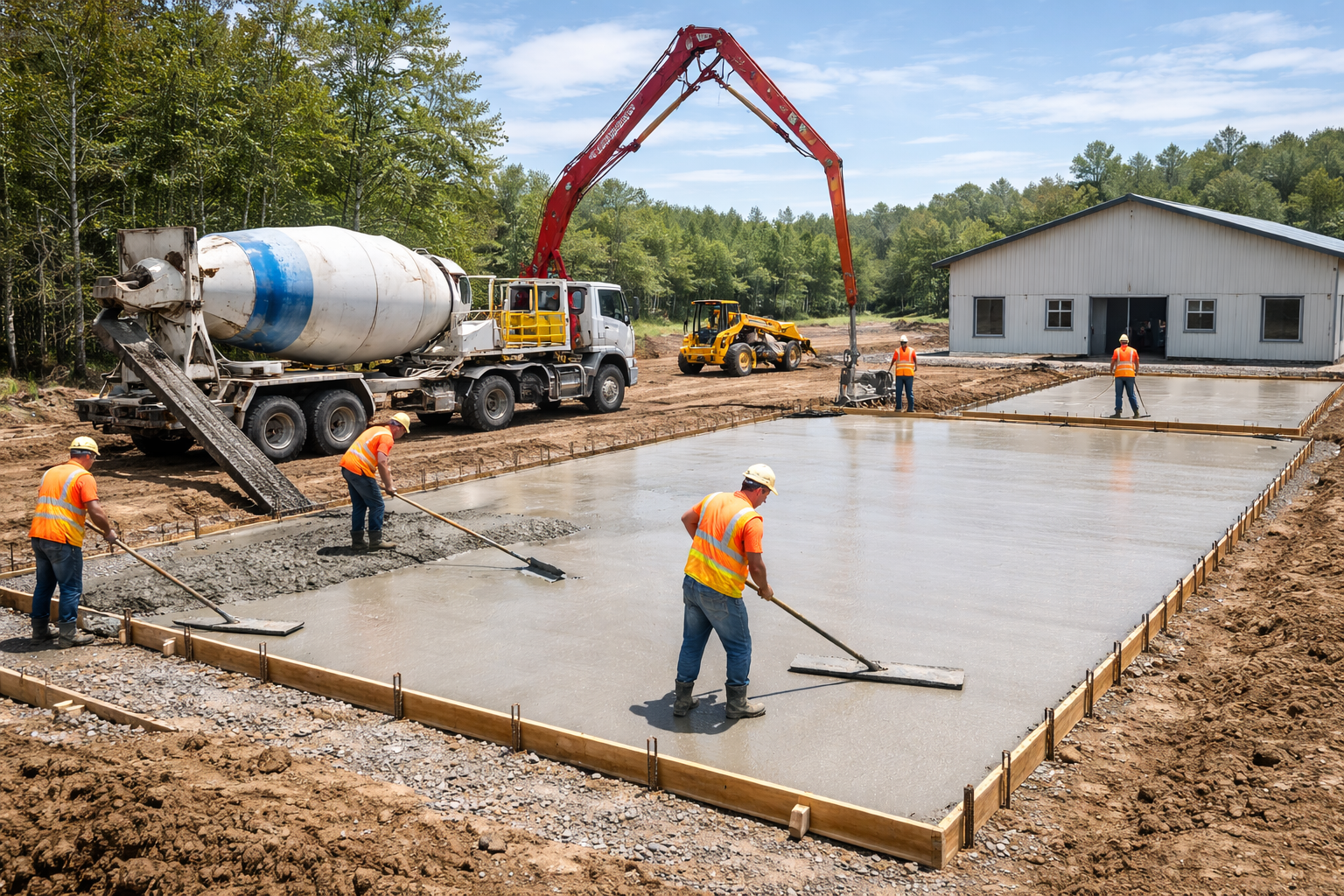
Concrete arrives from local suppliers with the specified mix design for your application and weather conditions. We place, screed, and float the surface to proper grades, install control joints at specified intervals, and apply the appropriate finish texture while the concrete reaches proper set time.

Advantages

The Precision Concrete Difference

These technical advantages ensure your concrete investment delivers decades of reliable performance.

Proper Base
Engineered Subgrade Preparation
We remove unsuitable clay soils and install engineered base materials compacted to specified density. This prevents the differential settling that cracks concrete when clay soils expand and contract with moisture changes common in Southeast Alabama's climate.
Laser Grading
Precise Elevation Control
Laser-guided screeding ensures consistent thickness and proper drainage slopes across the entire pour. This eliminates low spots where water pools and prevents thin sections that crack under load, delivering uniform strength throughout the concrete surface.
Climate Timing
Weather-Appropriate Scheduling
We schedule pours during optimal temperature and humidity conditions, avoiding extreme heat that causes rapid moisture loss and cold snaps that prevent proper curing. This ensures the concrete reaches full strength and durability in Southeast Alabama's variable weather patterns.
Load Design
Application-Specific Reinforcement
Rebar placement and concrete thickness get designed for your actual load requirements, whether that's passenger vehicles, farm equipment, or structural loads. This prevents over-building that wastes money and under-building that leads to premature failure.
Joint Planning
Strategic Crack Control
Control joints get placed at calculated intervals and depths to direct cracking where it won't affect performance or appearance. This prevents random cracking that occurs when concrete tries to shrink during curing without planned relief points.
Local Knowledge
Wiregrass Soil Experience
Decades of working with Southeast Alabama's expansive clays and sandy loam soils means we know which base preparations work and which fail. This local experience prevents the costly mistakes that occur when contractors unfamiliar with regional soil conditions attempt concrete work.
Local Knowledge

Concrete Work in Southeast Alabama

Southeast Alabama's clay soils present unique challenges for concrete construction, as these expansive soils can exert tremendous upward pressure on slabs during wet seasons and create voids during dry periods. The key to successful concrete work in Coffee, Dale, Houston, Pike, and Barbour Counties lies in understanding how these clay layers behave and designing base preparations that isolate the concrete from soil movement.

Common site conditions in the Wiregrass region include shallow clay layers over sandy subsoils, seasonal high water tables, and areas where previous agricultural use has left compacted hardpan layers. DJ encounters these conditions regularly and knows which require deep excavation, which need drainage systems, and which can be stabilized with proper base materials and compaction techniques.

Alabama Department of Environmental Management (ADEM) regulations require proper erosion control during concrete construction, particularly for projects near streams or wetlands common in the Choctawhatchee and Pea River watersheds. We maintain current stormwater permits and use approved sediment control measures during excavation and base preparation phases.

Based in Ariton, we typically reach job sites across the Wiregrass region within 30-45 minutes, allowing us to respond quickly to weather changes that affect concrete scheduling. DJ provides free estimates with detailed scope of work and material specifications for all concrete projects throughout Southeast Alabama.

Concrete work in progress on a rural Southeast Alabama property
Concrete Service Area
  • Enterprise
  • Ozark
  • Dothan
  • Troy
  • Eufaula
  • Midland City
  • Daleville
  • New Brockton
FAQ

Common Questions About Concrete

Have a question not answered here? Call DJ Hyde directly — he picks up and can usually answer on the spot.

Call (334) 432-1473
Residential driveways typically need 4 inches of concrete with wire mesh reinforcement for standard passenger vehicles, while driveways handling farm equipment or heavy trucks require 6 inches with rebar grid reinforcement. The thickness also depends on your soil conditions - areas with expansive clay may need thicker sections or special base preparation.
Most concrete cracking in our area results from clay soil movement beneath the slab, inadequate base preparation, or missing control joints. Clay soils expand when wet and shrink when dry, creating uneven support that cracks concrete. Proper base installation and strategic joint placement prevent most cracking issues.
You can typically walk on concrete after 24 hours and drive passenger vehicles after 7 days, but heavy equipment should wait 28 days for full strength development. Hot weather speeds curing while cold weather slows it, so we adjust these timelines based on actual conditions during your pour.
Yes, we coordinate concrete delivery from local suppliers and arrange pumping when access requires it. We specify the mix design based on your application and schedule delivery for optimal weather conditions. All you need to do is ensure clear access to the work area.
Our pricing includes excavation, base preparation, forming, reinforcement installation, concrete placement, finishing, and cleanup. We provide detailed written estimates that break down materials and labor so you know exactly what's included. Additional costs might include special base materials if soil conditions require them.
We can pour concrete year-round in Southeast Alabama, but cold weather requires special precautions like heated water in the mix and insulating blankets during curing. We monitor weather forecasts closely and won't pour if freezing temperatures are expected within 48 hours of the pour.
Proper drainage starts with grading the area to slope away from the concrete, installing perimeter drains where needed, and ensuring downspouts and surface water don't flow toward the slab. We also seal expansion joints to prevent water infiltration that can undermine the base over time.

Ready to Talk About Your Concrete Project?

Describe your concrete needs and site conditions - DJ will respond within one business day with a detailed assessment and written estimate.