

Southeast Alabama — Wiregrass Region

Professional
Site Clearing Services

Complete site preparation from raw land to finished grade using tracked carriers, dozers, and excavators. DJ Hyde personally runs every job across Coffee, Dale, Houston, Pike, and Barbour counties throughout the Wiregrass region.

Why Hyde's Construction
Fully Insured
Full coverage on every job site
Owner Operated
DJ Hyde runs every project
Based in Ariton, AL
Serving the Wiregrass region
Free On-Site Estimates
No obligation, same-day response
Call DJ Hyde directly(334) 432-1473

Mon–Fri 7am–5pm · Fast response guaranteed

Service Overview

What Is Site Clearing and Preparation?

Site clearing and preparation transforms raw land into a ready-to-build surface through systematic removal of vegetation, debris, and obstacles, followed by precise grading to establish proper drainage and elevations. DJ uses tracked carriers with drum mulcher attachments to clear trees and brush, dozers to push and grade material, and excavators to handle stumps, rocks, and fine grading work.

The finished site has stable, properly compacted soil at the correct grade for your intended use, with established drainage patterns that direct water away from structures and prevent erosion. All organic debris is either mulched in place to enrich the soil or hauled away, depending on your project requirements.

Southeast Alabama's sandy loam soils drain well but can be unstable when disturbed, while clay areas require careful moisture management during grading. The region's mix of loblolly pine, sweetgum, and dense understory vegetation like privet and greenbriar demands equipment that can handle both large timber and thick brush efficiently.

From Enterprise to Eufaula, Dothan to Troy, DJ personally oversees every site clearing project to ensure proper execution. Based in Ariton with equipment staged throughout Dale County, Hyde's Construction delivers owner-operated reliability across the entire Wiregrass region.

Request a Free Site Assessment
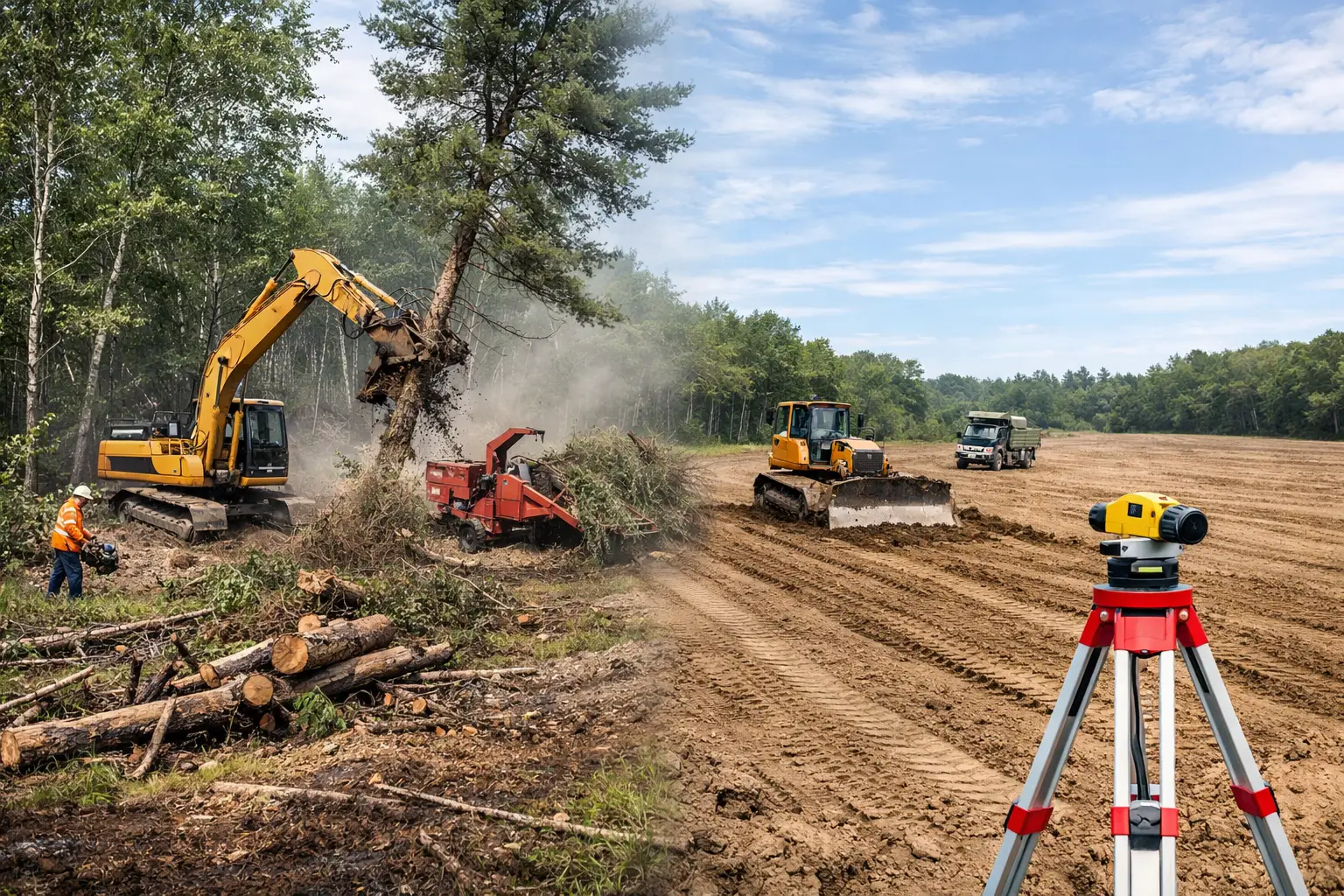
Hyde's Construction Site Clearing & Preparation services in Southeast Alabama
Common Project Types

Common Site Clearing and Preparation Projects

Site preparation requirements vary significantly based on intended land use and existing site conditions.

01
Home Building Sites
Residential site clearing removes trees and vegetation within the building envelope plus access areas, followed by rough grading to establish foundation elevations and drainage slopes. Fine grading around the house pad ensures water flows away from the foundation at proper grades, typically 6 inches of fall in the first 10 feet from the structure.
02
Commercial Development Sites
Commercial site preparation involves large-area clearing for buildings, parking, and utilities, with precise grading to meet ADA compliance and stormwater management requirements. Heavy equipment access routes are established early to support construction traffic, and detention pond areas are rough-graded to handle increased runoff from impervious surfaces.
03
Agricultural Field Preparation
Converting timber or pasture land to row crop production requires complete vegetation removal, stump grinding, and land plane finishing to create uniform planting surfaces. Drainage patterns are established to prevent standing water while maintaining topsoil, and field roads are graded for equipment access during planting and harvest seasons.
04
Recreational Property Development
Hunting camp and recreational sites need selective clearing that maintains natural screening while creating usable areas for cabins, food plots, and access roads. Site preparation balances habitat preservation with functional development, often incorporating existing terrain features into the final design.
05
Industrial Site Development
Manufacturing and warehouse sites require heavy-duty clearing and grading to support substantial structural loads and heavy equipment traffic. Site preparation includes establishing robust drainage systems, compacting subgrade materials to engineering specifications, and creating level pads capable of supporting concrete slabs and heavy machinery.
06
Utility Corridor Preparation
Power line and pipeline corridors need linear clearing with specific width requirements and access for maintenance equipment. Site preparation maintains required clearances from conductors or pipes while establishing access roads that can handle utility trucks and specialized maintenance equipment throughout the corridor's length.
The Process

From Raw Land to Finished Grade

DJ personally manages each phase of site preparation to ensure the finished grade meets your project specifications and local drainage requirements.

1

Site Assessment and Planning

DJ walks the property to identify existing drainage patterns, soil conditions, and obstacles like large stumps or rock outcroppings. He marks utilities, establishes benchmark elevations using a transit or laser level, and determines the most efficient clearing sequence to minimize soil compaction from equipment traffic.

2

Vegetation Removal and Debris Management

Tracked carriers with drum mulcher attachments clear trees and brush, mulching smaller material in place while segregating larger timber for removal or burning. Stumps are either ground below grade or excavated completely depending on final use requirements, and any debris piles are burned or hauled away per local regulations.

3

Rough Grading and Drainage Establishment

Dozers push and spread soil to approximate final elevations while establishing primary drainage swales and slopes. Cut and fill operations balance earthwork to minimize material import or export, and temporary erosion control measures are installed if work extends through multiple weather cycles.

4

Fine Grading and Site Finishing

Final passes with dozers or excavators bring the site to precise elevations and slopes specified in the plans. Subgrade is compacted to support intended loads, finish grades are checked with instruments to ensure proper drainage, and the site is ready for construction or seeding depending on the project timeline.

Advantages

The Owner-Operated Site Preparation Difference

When DJ Hyde personally runs your site clearing project, you get precision work that larger contractors often can't match.

Personal Oversight
DJ Runs Every Job Personally
Unlike larger contractors who send crews while the owner stays in the office, DJ operates the equipment himself on every site clearing project. This means immediate decision-making when site conditions change, no communication delays between crew and management, and consistent quality from start to finish.
Drainage Expertise
Proper Water Management From Day One
Site preparation in Southeast Alabama's clay and sandy loam soils requires understanding how water moves across the Coastal Plain's subtle topography. DJ establishes drainage patterns during initial clearing rather than trying to fix water problems after construction, preventing costly rework and foundation issues.
Equipment Match
Right Machine for Each Site Condition
Hyde's Construction maintains tracked carriers, dozers, and excavators to handle varying site conditions efficiently. Tracked machines distribute weight better on soft soils, while different blade configurations optimize cut-and-fill operations based on soil type and moisture content at the time of work.
Local Knowledge
Wiregrass Region Site Conditions
Twenty years of site work across Coffee, Dale, Houston, Pike, and Barbour counties means DJ knows how different soil types behave when disturbed, where seasonal water problems occur, and which vegetation indicates underlying drainage issues. This prevents surprises that delay projects and increase costs.
Flexible Scheduling
Weather-Smart Project Timing
Owner-operated scheduling allows DJ to move quickly when weather windows open and pause work when conditions would damage the site or compromise quality. Large contractors often push through marginal conditions to maintain crew schedules, resulting in compacted soils and drainage problems.
Cost Control
No Markup on Subcontracted Work
DJ performs site clearing and preparation with his own equipment and labor, eliminating subcontractor markups and coordination delays. When additional services like concrete work or pond construction are needed, they're handled directly by Hyde's Construction rather than farmed out to unknown third parties.
Local Knowledge

Site Clearing & Preparation in Southeast Alabama

The Wiregrass region's diverse soil conditions significantly impact site preparation techniques and timing. Sandy loam soils common around Enterprise and Ozark drain quickly but become unstable when saturated, requiring careful moisture management during grading operations. Clay soils prevalent in parts of Dale and Houston counties hold water longer but provide better stability once properly compacted, though they're nearly impossible to work when wet.

Dense vegetation typical of Southeast Alabama presents unique clearing challenges that affect project scheduling and costs. Mature loblolly pine forests require different equipment approaches than mixed hardwood stands with sweetgum and oak. Understory vegetation like privet, kudzu, and greenbriar can bog down smaller equipment, while palmetto and yaupon holly in low areas indicate seasonal drainage issues that must be addressed during site preparation.

Alabama Department of Environmental Management erosion control requirements apply to sites over one acre, mandating silt fencing, temporary seeding, and stabilized construction entrances during active work. Stormwater management becomes critical on larger developments, requiring detention basins and controlled discharge points that must be incorporated into initial site grading rather than added as afterthoughts.

Based in Ariton with equipment staged throughout Dale County, Hyde's Construction provides rapid response to site preparation projects across the Wiregrass region. Drive times to most project sites remain under 45 minutes, allowing DJ to check progress frequently and adjust operations based on changing site conditions or weather.
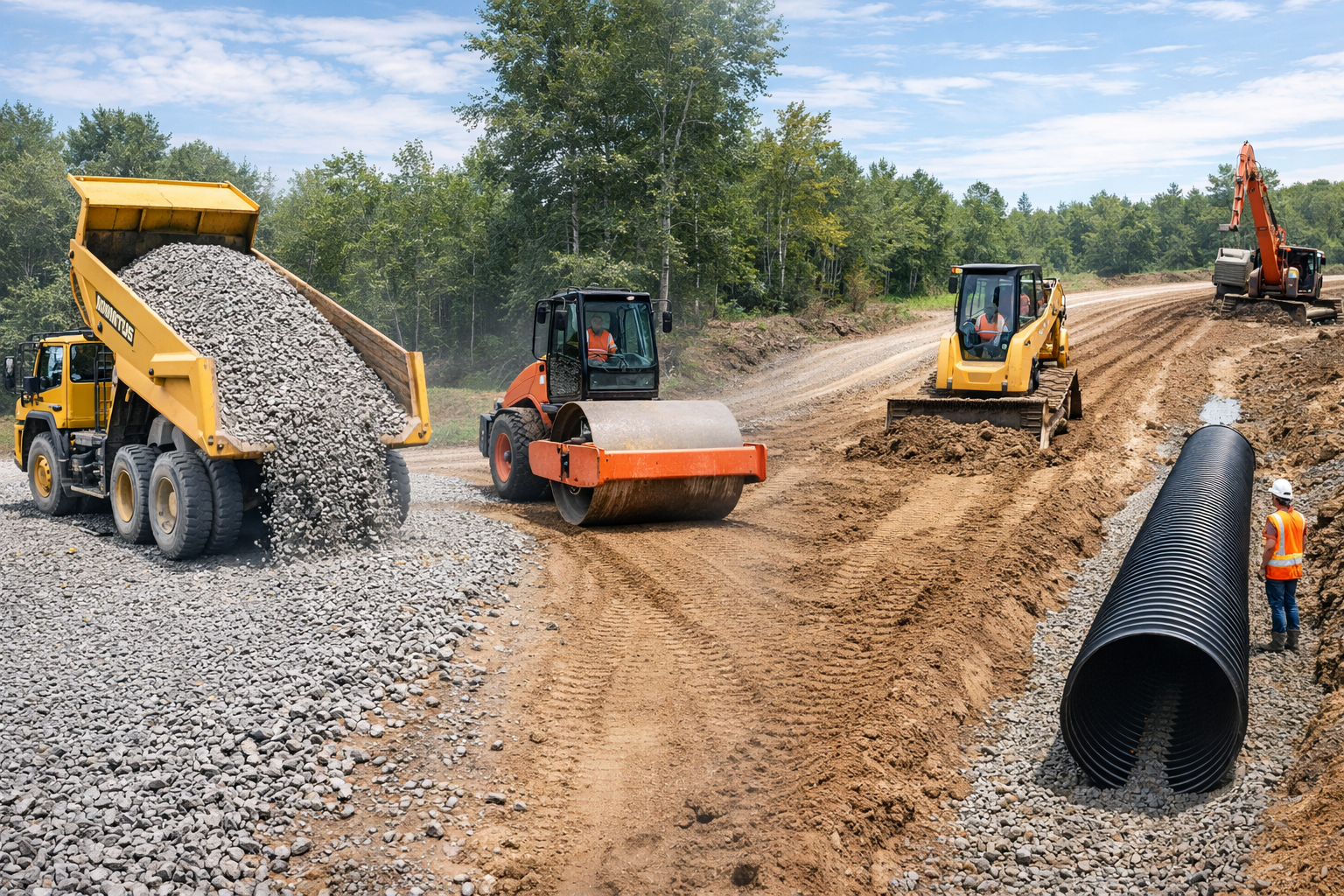
Site Clearing & Preparation work in progress on a rural Southeast Alabama property
Site Clearing & Preparation Service Area
  • Enterprise
  • Ozark
  • Dothan
  • Troy
  • Eufaula
  • Midland City
  • Daleville
  • New Brockton
FAQ

Common Questions About Site Clearing & Preparation

Have a question not answered here? Call DJ Hyde directly — he picks up and can usually answer on the spot.

Call (334) 432-1473
Most residential sites take 2-5 days depending on size and vegetation density, while commercial projects can run 1-3 weeks based on acreage and grading complexity. Weather conditions significantly affect timing since working wet soils causes compaction problems that are expensive to fix later.
Complete site preparation includes vegetation removal, stump grinding or removal, rough grading to establish drainage patterns, fine grading to final elevations, and subgrade compaction. Debris disposal, erosion control measures, and temporary access roads are also part of comprehensive site prep.
DJ assists with ADEM permit applications for sites over one acre and installs required erosion control measures like silt fencing and stabilized entrances. However, engineered stormwater management plans typically require separate engineering services, though DJ can recommend qualified professionals he works with regularly.
Yes, selective clearing preserves specimen trees and natural features where feasible. DJ uses smaller equipment near trees to be saved and maintains adequate root protection zones during grading operations. However, some trees may not survive construction disturbance regardless of protection efforts.
Smaller brush and limbs are typically mulched in place using drum mulcher attachments, enriching the soil naturally. Larger timber can be segregated for firewood or lumber if desired, while remaining debris is either burned on-site with proper permits or hauled to approved disposal facilities.
Southeast Alabama's Coastal Plain geology rarely presents major rock issues, but occasional limestone outcroppings or hardpan layers require excavator work or specialized equipment. DJ assesses subsurface conditions during initial site visits and adjusts equipment selection and pricing accordingly.
Rough grading establishes general site elevations and drainage patterns using dozers, typically within 6 inches of final grade. Finish grading brings surfaces to precise elevations and slopes specified in construction plans, often requiring multiple passes with different equipment to achieve proper compaction and smoothness.

Ready to Talk About Your Site Preparation Project?

Describe your property and development plans, and DJ will provide a detailed assessment of clearing and grading requirements. All estimates include a personal site visit within one business day.